Sunday, 21 June 2015

Mata Vaishno Devi Temple and Prasad

vaishno devi prasad
Mata Vaishno Devi Temple
India is a country known for its religious diversity, with Hinduism being one of the major religions with a substantial number of followers. One of the most well known pilgrimages of Hindu religion is Mata Vaishno Devi Temple, a holy shrine dedicated to Mata Vaishnavi, who is an incarnation of Maa Durga. The world famous temple lies nestled in the Trikuta Mountains, at an altitude of 5300 feet, in the state of Jammu and Kashmir. Millions of devotees from all over India and across the world embark on this pious pilgrimage every year, to pay obeisance to Ma Vaishnavi and seek her blessings for fulfillment of all their wishes. The pilgrimage, which is done by foot, is a difficult one, but its difficulty does not dissuade the devoted worshippers from taking up this tasking journey and some even do it barefooted. However, those who cannot reach the temple by foot, can do it on horseback and now, even helicopter services are available to the Bhawan, the main shrine.

Mata Vaishno Devi Temple

The main shrine of Mata Vaishno Devi, popularly known as the Bhawan is located inside a cave which enshrines the three Pindies of Maa Adi Shakti, representing Maa Saraswati, Maa Lakshmi and Maa Kali. The cave extends over a distance of 98 feet and a stream of cold water called Charan Ganga runs through it. Pilgrims have to move across this stream to reach the sanctum and have the darshan of the Pindies, which are believed to bring happiness in their lives and drive away all kinds of sorrows. Reaching the temple and paying their obeisance to Maa after a long and difficult yatra brings supreme joy, peace and happiness to the devotees. They are given the Prasad and sacred water from the shrine, which they can carry home, as the blessing of Mata Vaishno Devi. The vaishno devi Prasad can now be received online with the help of Bhakti Online.

Mata Vaishno Devi Yatra

Mata Vaishno Devi Yatra begins at the sacred town of Katra, which is located a short distance from the city of Jammu and is easily accessible by road and now, by train too. The yatra is long and tough, but the devotion of the pilgrims gives them the energy to move on, as they cross the landmarks such as Ban Ganga, Charan Padukam Ardh Kuwari and Saanjhi Chhatt to reach the Maa Vaishno Devi Bhawan and get the blessings of Mata. Further ahead, devotees visit the Bhairo Temple, which has been built as a tribute to Bhairo Nath, who sought forgiveness from Mata after she beheaded him. Mata Vaishn Devi blessed him that the pilgrimage to her temple would be complete only after the devotees visited his temple.

Online Prasad by Bhakti Online

Devotees who cannot visit Mata Vaishno Devi Temple personalle can now get the blessings as well as Prasad from the temple with the help of Bhakti Online. They just have to make a nominal payment and Prasad would be offered on their behalf at the temple and later delivered to their doorstep. The online Prasad package would constitute of the Prasad offered along with Mata ka Sikka and a beautiful photo of Mata Vaishno Devi Temple. It is a convenient and inexpensive way to get the blessings of Mata right from your home.

Thursday, 28 May 2015

Salasar Balaji Temple and Online Prasad


India is the land of rich culture and tradition and diverse religions, with Hinduism being one of the main religions with a large number of followers in the country. Salasar Balaji Temple or Salasar Dham is a Hindu temple located in a small town called Salasar in Churu district of Rajasthan, which is dedicated to Hanuman, also known by the name of Balaji. 

About Salasar Balaji Temple


The temple is a major center of attraction for devotees of Hanuman, who particularly flock it on a fair organized on the auspicious occasion of Chaitra Purnima or Ashvin Purnima. The temple was originated as a small construction, and is today revered as a Shakti Sthal, which implies that it is a place of power and Swayambhu, self created pilgrimage which holds great faith and undying belief in the hearts of thousands of devotees whose wishes have been fulfilled here. The legend about the temple is that an idol of Balaji was unearthed at the village of Asota by a farmer while digging the soil. The same night, the Thakur of the village as well as another devotee in Salasar had a vision to have the idol of Balaji installed at the village of Salasar, which later became famous as the site of Salasar Balaji Temple or Salasar Dham. The idol of Hanuman at the temple is unique in the respect that it bears a moustache and a beard, which makes it different from all other idols of the deity around the world. The temple is built with liberal use of white marble while other materials such as brick, lime stone, mortar and cement have also been used in its construction.

Rituals and Customs

The popular belief about Salasar Balaji Temple is that water in the wells of this village comes as the blessing of Balaji. It is customary to tie coconuts with sacred red thread in the temple premises, which is believed to fulfill one’s wish is done with utmost faith and devotion. Another custom of the temple is Savamani, which means offering food weighing 51 kg by the devotees. The meal includes delicacies such as daal baati choorma, boondi, ladoo and peda. It is first offered as a bhog to Balaji and later distributed among the family members as well as the needy people. The temple remains open from 4 AM in the morning to 10 PM at night. 


The Prasad offered at Salasar Balaji Temple is Chirawa Peda. For those who cannot visit the temple personally to pay their obeisance, they can offer onlinePrasad through the temple website. Once the Prasad is booked online by the client, the representative of the website visits the temple on the very next day to offer it on the behalf of the client. Next, the Prasad is carefully and professionally packaged and delivered to the client’s doorstep. Steps are taken to ensure that the Prasad remains unspoiled during this period. In case the devotees want to offer the Prasad on a special occasion, the same is handled too. The Prasad is delivered online on a nominal cost and gives devotees an opportunity to seek the blessings of their deity from their home itself.

Tuesday, 26 May 2015

Kanak Bhawan Temple and Online Prasad

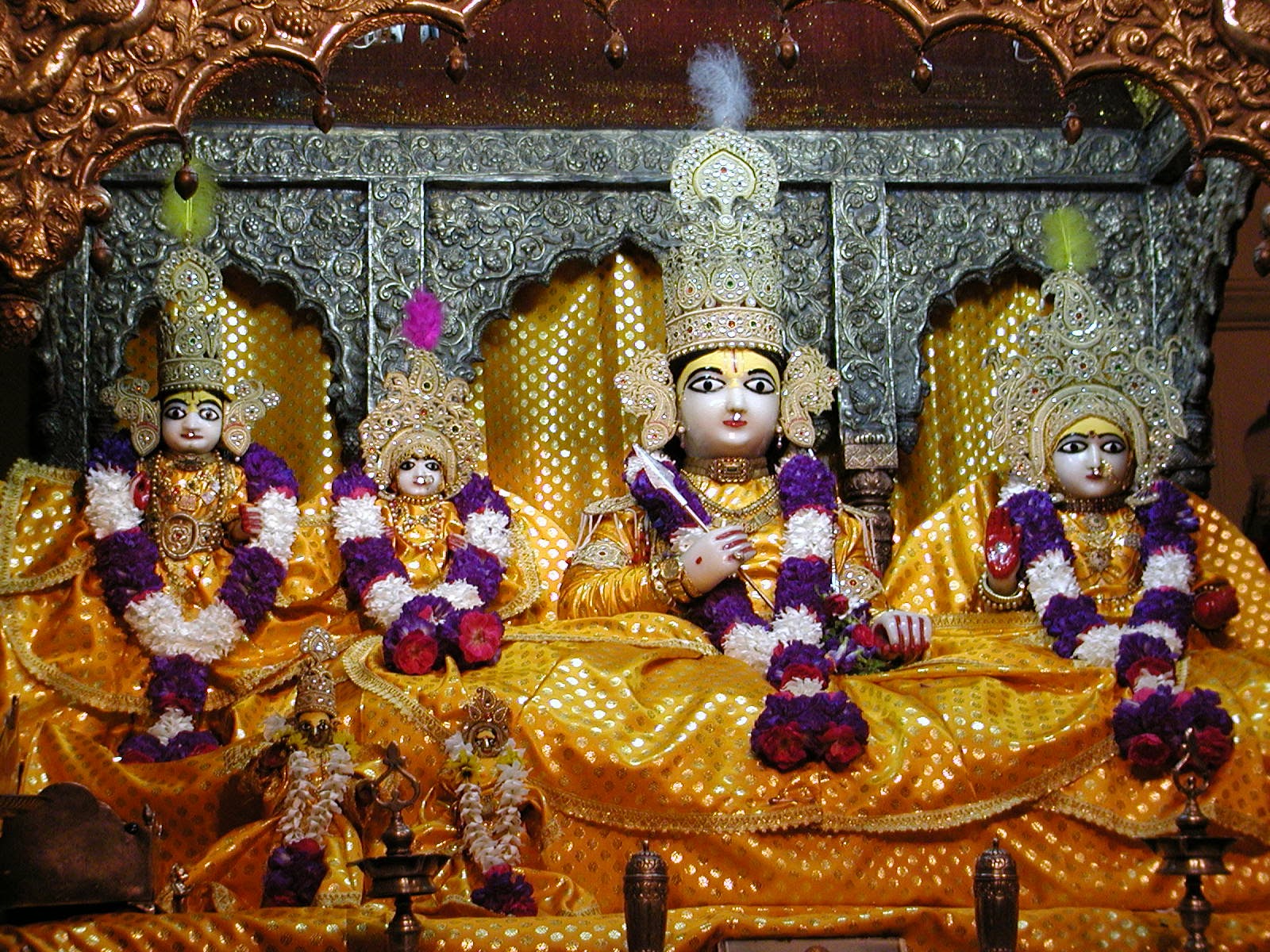
Ayodhya is one of the most famous destinations for devotees of Hindu religion as it is the birth place of Lord Rama. The temple of Kanak Bhawan is located near Hanuman Garhi and attracts thousands of pilgrims from all over the country. The glorious temple, which resembles a lavish palace in structure, gets its name from the gold crowns worn by the main deities, as kanak literally means gold. In fact, the temple was once called Sone ka Ghar.

About the Temple


Kanak Bhawan Temple is a magnificent temple which is believed to have been gifted to Lord Rama and Sita, by Queen Kaikey, the step mother of Lord Rama who was responsible for sending him to exile. The temple was presented by her to the couple on the occasion of their marriages, but it is believed that she didi not bear positive intentions for them. After its glorious history dating back to the Treta Yug, the temple fell into ruins and has been reconstructed and renovated over a period of centuries. It is said that the present construction has been carried out in 1891 by Rani Krishnabhanu Kunwari of Orccha. The temple is dedicated to Lord Rama and Goddess Sita and houses beautiful idols of the deities, which have been adorned with jewelry and crowns made in pure gold. The main building of the temple has a small shrine of Rampada and is built around an open courtyard. It makes a beautiful sight at the sunrise and the sunset. Though scores of devotees visit the temple every day, the crowds turn up in even greater numbers on special occasions and festivals such as Ram Navmi, Janki Navmi, Vijay Dashmi, Phool Bangla, Jhula, Holi, Ram Sita Vivaha and Sharad Purnima. It is believed that paying obeisance at the Kanak Bhawan Temple brings happiness and prosperity in the lives of the devotees. Ram Navmi, or the birthday of Lord Rama, is an occasion celebrated with great joy and gusto at the temple. It is said that worshipping at the temple on this auspicious day brings salvation or moksha for the person who does so. Ram Navmi is celebrated on the ninth day of the Krishna paksh of Chaitra month every year.

Rituals and Bhog Prasad

Kanak Bhawan Temple in Ayodhya si looked after by a trust and remains open on all days of the year. Aarti is performed 8 times a day, with bhog Prasad being offered to the deity every time the aarti is performed. Moreover, there is an akhand kirtan held in the temple complex, which carries on nonstop for 24 hours a day.

Online Prasad

For all the devotees of Lord Rama who cannot visit the Kanak Bhawan Temple personally due to some reason, online Prasad is an ideal option to pay their obeisance at the temple. They need to pay a nominal sum of money, after which a representative of the website visits the temple and offers Prasad there. in case the devotee wants this to be carried out on a particular day, the same is arranged for him. Subsequently, the Prasad is packaged in a professional manner after careful handling and then shipped off to the destination of the devotee, from where it is delivered to his doorstep.

Wednesday, 20 May 2015

Sri Radha Raman Temple and Online Prasad

Vrindavan is one of the most revered pilgrimages for the devotees of Lord Krishna and attracts millions of devotees from all over the country and the world every year. It is a small village with a large number of temples dedicated to Lord Krishna and his consort, Radha. One of the famous temples of Vrindavan is Sri Radha Raman Mandir or Sri Radha Raman Temple, which dates back to 1542 AD.

About The Temple

Sri Radha Raman Mandir was built by Gopala Bhatta Goswami, an ardent devotee of Lord Krishna, who found twelve Shaligrama shilas, idols of Lord Krishna while bathing in the Kali-Gandaki River. On Purnima night, he discovered that one of these shilas had transformed itself into a beautiful idol of Lord Krishna playing a flute, which came to be known as the Damodar Shila. This Shila of Radha Raman was the installed in the Sri Radha Raman Mandir, along with an idol of his consort Radharani, which made this auspicious temple get its name, as Radha Raman literally meand "The Lover of Radha". The temple, which is built in Rajasthani style of architecture, also has the Samadhi of its founder, Gopala Bhatta Goswami on its premises. It is an exquisitely crafted temple, which is accaliemd for its religious significance as well as its architectural splendor. A large number of devotees of Lord Krishna and Radharani from all around the world flock at the temple every day to get the blessings of the deities and pray for the prosperity and goodwill of their families.

Administration and Prasad


Sri Radha Raman Mandir is looked after the male members of the Goswami clan, the descendents of its founder. The Prasad is still prepared by them over the fire which is believed to have been lit in the temple kitchen since its early days. No match stick or any other item has ever been used to kindle the fire, which continues to burn for centuries now, which is considered nothing less than a miracle. The Goswami males, who offer their services or seva in the temple are allotted a calendar on the basis of which it is decided when they would perform their service or duty here. On major religious ceremonies and functions, they can even have their disciples join in to provide additional service at the temple.

Online Prasad

For those devotees who cannot travel to the Sri Radha Raman Mandir in Vrindavan, the service of online Prasad has been made available. All they have to do is to pay a nominal amount and the website representative will personally visit the temple to offer the Prasad there, which will later be delivered at the doorstep of the client within a few days. This Prasad consists of the famous peda Prasad of Vrindavan along with an auspicious photo of Sri Radha Raman. The Prasad is carefully handles and packed by professionals to ensure that it reaches the devotee unspoiled and brings along the blessings of Sri Radha Raman for him and his entire family.

Wednesday, 1 April 2015

Shirdi Sai Baba Temple and Online Prasad

The Sai Baba Temple in Shirdi is one of the richest temples in the country in terms of donations by the devotees, besides being the most visited temple too. The shrine is dedicated to Sai Baba and is the home to the Samadhi of this great spiritual guru. Built in 1922, the temple lies in a small village called Shirdi in Maharashtra, nearly 296 km from Mumbai and is easily accessible by road and rail. Nearly 20000 devotees visit the temple everyday and the number becomes even greater on some special occasions.

Sai Baba-The Miraculous Saint

Nothing is known about the birth of Sai Baba, who came to the village of Shirdi at the age of 16 years and performed a number of miracles to become a well known saint in the area. In his life span from 1838 to 1918, this great Guru lived like a fakir and fed on the Bhiksha given by people. He professed the philosophy of Shraddha and Saburi, which literally mean faith and compassion respectively. He led a simple and pious life and served the poor and cured the sick, performing unbelievable miracles in his life. He believed in equality of all religions and treated them all as equal and with same level of respect, which is why he carried forward the slogan of “Sabka Maalik Ek”. He combined the essence of Hinduism and Islam, and lived in a mosque but named it as Dwarkamai, which is a Hindi word. After his death, his remains were placed in Shirdi and a temple was built over his Samadhi, which became famous worldwide as Shirdi Sai Baba Temple. Shirdi Sai Baba has a large number of followers in the states of Maharashtra, Andhra Pradesh, Tamil Nadu, Gujarat and Karnataka, and is becoming popular all over the country day by day. People offer donations worth crores at the temple every year, which makes the temple one of the richest in the country.

Shirdi Sai Baba Temple attracts a large number of devotees on a daily basis, which means that they have to wait in long queues before they can have the darshan in the main complex of the temple. The lines are particularly long on the festive occasions and the wait may even last as long as 5 to 6 hours on these days. The temple opens at 5 AM in the morning and closes at 10 PM at night and is thronged with devotees throughout the day. The samadhi of Sai Baba is made in pure white marble, with railings around it. Besides it, there is the statue of Baba in Italian marble, which seems to captivate the onlookers with its glory.

Shirdi Sai Baba Online Prasad


If you cannot visit the temple, you can get online Prasad from it by paying a nominal amount. When you place an order for online Prasad at Shirdi Sai Baba Temple, you will get a package containing udi prasadam, dry sweets and a picture of Shirdi Sai Baba, which would be delivered at your doorstep within a few days.

Wednesday, 25 March 2015

Vaishno Devi Yatra and Online Prasad

Vaishno Devi Temple is one of the most important religious places in the Hindu religion, which is dedicated to the Goddess Shakti, the manifestation of power in the form of a kanjak or young girl. The shrine of Mata Vaishno Devi is located in the Trikuta Mountains in the state of Jammu and Kashmir. The sacred temple lies at the elevation of 5300 feet, just 13 km from the town of Katra. This distance has to be covered on foot by the pilgrims and is known by the name of Vaishno Devi Yatra.

.
Vaishno Devi Temple Legend

One of the most visited pilgrimages in India is the Vaishno Devi Temple, a natural cave temple which houses the three holy pindies of Goddess Lakshmi, Kali and Saraswati, all the three manifestations of Goddess Durga. As the legend goes, this cave served as the place where Vaishno Devi meditated and used as a hideout to evade Bhairo Nath, a wicked man who wanted to get married to her forcibly. When he was after her, she had to behead and kill the evil man and his severed head feel on a hill located at a distance, where Bhairon Temple of the present day is located. As Bhairo Nath was beheaded by Vaishno Mata, he asked her for penance and Mata granted it to him, along with the blessing that a visit to the Bhairo Temple would be necessary for the completion of Vaishno Devi Yatra. This was when she transformed herself into the sacred pindies and the temple was established at this location.

Vaishno Devi Yatra

Vaishno Devi Yatra refers to the 13 km path from Katra near Jammu, to the cave temple of Mata Vaishno Devi located in the Trikuta Temple, which is known as Bhawan. Devotees can reach from Jammu to Katra by road, covering a distance of 61 km. The Yatra is carried on foot or horseback, while some ardent devotees cover this treacherous path barefoot. These days, the yatra can be covered easily and in a short time by a helicopter service. On the other hand, those who cannot walk and do not afford to spend a lot of money, can use a palki drawn by men, for the yatra. Located just 1 km from Katra is the first important landmark of the Yatra, which is known as Banganga, a small stream where Vaishno Devi had satiated her thirst while being followed by Bhairo Nath. 6 km ahead is the cave of Ardhkawari, where Mata hid for 9 months and meditated, followed by Sanjhi Chha, which is 9.5 km ahead and the holy cave at Bhawan, lying at a distance of 3.5 km from Sanjhi Chhat. The Yatra is not easy, but the deep faith and determination of the devotees take them ahead.

Vaishno Devi Online Prasad

Vaishno Devi Prasad comprises of mishri (rock candy) and coins inscribed with the pictures of the three pindies called khazana. A bhaint offered by the devotees at the temple consists of coconut, mishri, fulian, chunri, mouli and pooja samagri, all of which can be brought outside the shrine at no profit no loss basis. Online Prasad from Vaishno Devi Shrine can also be easily received by making a nominal payment. Online Prasad consisting of panch bhog, khazana coins, a photo of pindi darshan and special puja items from the shrine, is received within a few days. This is a convenient way to get the blessings of the temple, particularly for those who cannot visit the shrine personally.

Tuesday, 3 March 2015

Top 10 Jain Temples in India

Jainism is an ancient religion which preaches and practices the aim to liberate the soul from the ties of life and death. It is one of the oldest religions in the world, with a large number of followers. Since Jainism has its roots in India, the country has a large number of Jain temples, which are of great significance and visited by devotees from all over the world every year.

Listed below are the top 10 Jain temples in India:

10.Shikharji Temple, Jharkhand

One of the most sacred pilgrimages for Jains lie on Shikharji, the highest mountain in the state of Jharkhand, where the famous Shikharji Temple is located. The temple is built in devotion of Digambar Jains.

9.Bawangaja Jain Temple, Madhya Pradesh

Bawangaja Jain Temple in Madhya Pradesh has achieved worldwide fame as it houses the 84 feet tall statue of Tirthankara Adinatha, the first Tirthankara of the Jain religion. The spectacular temple lies in the Satpura Mountain Range.

8.Dharmanath Jain Temple, Kochi

The Dharmanath Jain Temple of Kochi is another important temple of Jain religion in Indi. The temple is believed to be 100 years old and is visited by hordes of devotees every year.

7.Lal Mandir, Delhi

Another important Jain temple is the Sri Digambar Jain Lal Mandir, which is located opposite to Red Fort in Delhi. As its name suggests, the temple is made of red sandstone and dates back to 1526, though it underwent extensie renovation in the 19th century.

6.Khajuraho Jain Temples

Khajuraho Jain Temples are acclaimed all over the world for their erotic sculptures. These ancient temples are dedicated to Hinduism as well as Jainism and were built from 950 to 1150. The Eastern part of Khajuraho was supposedly inhabited by Jains and most of the Jain temples lie here. While some of them are in ruins, a few have withstood the test of time.

5.Sonagiri Temples

Sonagiri, a small town in Madhya Pradesh, is home to some beautiful Digambar temples, which have to be reached by climbing up a flight of 300 stairs. But the labor hardly dissuades pilgrims from reaching the top and viewing countless white temples in the surroundings.

4.Palitana Temples, Gujarat

Next among the most important Jain temples in the country are the Palitana Temples located in a city called Palitana in Gujarat. The main temple, which is dedicated to Svetambara Jains, lies on the hill top, while there are a thousand more of them on the Shatrunjaya Hills.

3.Ranakpur Temple, Rajasthan

Nestled in the lap of the Aravalli Hills, Ranakpur Temple lies between the cities of Udaipur and Jodhpur. The spectacular temple is made in marbe and is one of the most visited pilgrimage spots in Jain religion.

2.Gomateshwara Temple, Shravanbelagola

Featuring next on the list of top 10 Jain temples in India is the magnificent statue of Gomateshwara in Shravanbelagola, Karnataka. The 58 feet tall statue is considered as one of the biggest monolithic statues in the world. It is anointed with milk, ghee, curd, saffron and gold coins in the Mahamastakabhisheka festival held every 12 years.

1.Dilwara Jain Temples, Mount Abu

Dilwara Temples, which are located in the picturesque hill station of Mount Abu in Rajasthan, are revered as some of the most important temples of Jain religion. Built in marble, these five temples are unique examples of brilliant architecture and craftsmanship with delicately carved pillars, ceilings and panels. They were built by Chalukya Dynasty and are appreciated all over the world.

All these temples attract followers of Jain religion, not only from within the country, but also from abroad. They are truly the living symbols of this ancient religion.

Bhakti Online offers online Prasad for those people who are busy businessmen, housewives, NRIs or aged. Enjoy countless blessings delivered at your address.Our representative will visit temple on your behalf and offer prasad to the deity.